The World Cup finished on July 19. Spain beat Argentina 1-0 at MetLife Stadium in New Jersey, Ferran Torres scoring in the 106th minute of extra time. It was Spain's second title.
It was the first men's World Cup on US soil since 1994, and most of it was here: 104 matches across 16 host cities, 11 of those cities in the United States and 78 of the games. The US team topped its group and scored eleven goals, then lost 4-1 to Belgium in the round of 16 in Seattle on July 6.
What a home tournament does not do on its own
There is a standard line about home World Cups, that they pull a wave of new kids into the game. The published research does not support it. A scoping review in Frontiers in Sports and Active Living went through 146 studies of sport events and participation and concluded that "there is little evidence to support that mega sport events stimulate grassroot participation." Its authors add that youth is the population these claims are usually made about and the population least studied.
So if your kid has been kicking a ball against the garage since the final, that interest is theirs and not the tournament's. It still needs somebody to fill in a registration form.
Where to start
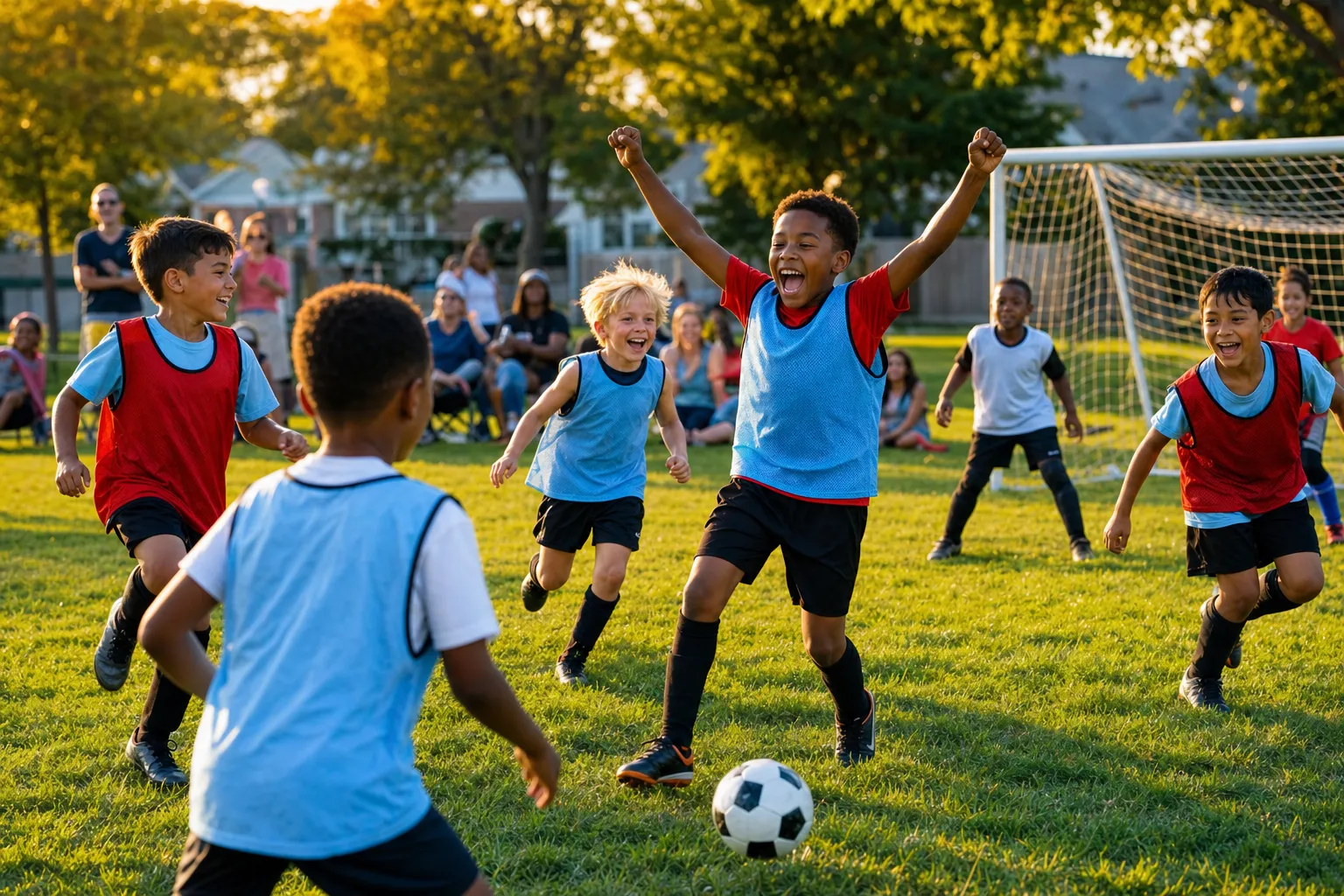
A recreational or beginner program, not a club. AYSO's core rules are the clearest published example of what that means: "interest and enthusiasm are the only criteria", no elimination tryouts, nobody is cut, and every player gets at least half of every game.
Search the club directory for what is within driving distance of you, and read rec against travel for what separates the two.
The pressure to make it serious
Somewhere behind the beginner program sits the upgrade offer: the serious club, the private trainer for a seven-year-old. It is not a rare pitch. More than half of the parents in the Aspen Institute's 2024 national survey reported some or a lot of pressure to have their child specialize in one sport. Asked which goals make that pressure appropriate, 24.8% named playing professionally.
The research on reaching that level points the other way. A meta-analysis covering 6,096 athletes, among them 772 of the world's top performers, found that adult world-class athletes did more multisport practice as children, started their main sport later, and had accumulated less practice in it than athletes who topped out at national level. The American Academy of Pediatrics gives the same advice to pediatricians: multiple sports at least until puberty, and specializing in late adolescence carries a higher chance of reaching an athletic goal, not a lower one.
The children answer the question too. Asked why they play, the 3,827 young athletes in the Aspen Institute's 2025 survey said having fun (48%) and playing with friends (47%). Earning a college scholarship came in at 12%.
If you want to see how far down the ladder the players on those screens actually started, real players' routes traces them, and the odds of going pro shows the arithmetic behind them.
Where these numbers come from
- ESPN, Spain edge Argentina after extra time to win 2nd World Cup title (July 19, 2026). The final score, the scorer and the minute.
- US Soccer, USMNT vs Belgium match recap (July 6, 2026). The 4-1 round-of-16 result, the group finish and the eleven goals.
- ESPN, World Cup 2026 host cities and the 2026 match schedule. Sixteen host cities with eleven in the United States, 104 matches, 78 of them played in the US.
- Teare G and Taks M, Sport Events for Sport Participation: A Scoping Review, Frontiers in Sports and Active Living, 2021. 146 articles reviewed, and the finding on mega events and grassroots participation.
- AYSO Core. Open Registration, no tryouts, and the half-a-game playing-time rule.
- Aspen Institute, National Youth Sports Parent Survey 2024 (n=1,848). Specialization pressure and the goals parents say justify it.
- Project Play, Aspen Institute national survey of youth and sports (April 2026, n=3,827 youth aged 10-17). Why children say they play.
- Güllich A, Macnamara BN and Hambrick DZ, What Makes a Champion?, Perspectives on Psychological Science 2022;17(1):6-29. The multisport and later-start pattern in world-class athletes.
- Brenner JS and the AAP Council on Sports Medicine and Fitness, Sports Specialization and Intensive Training in Young Athletes, Pediatrics 2016;138(3):e20162148. The guidance on multiple sports and late specialization.